

In the last article of the doomsday countdown, I spoke about how weird it is for people to weaponise the sacrosanctity of mythological and fictional adaptations. But now let’s talk about how weird it is for people not to do that with real historical events.
I’ve noticed it before, but rewatching the Marvel universe from beginning to end has made me realise just how prolific this trope really is. Again and again, the MCU quietly inserts fictional characters into real historical events, not as bystanders, but as the hidden architects behind them. Here are just a few examples I pulled from the MCU timeline:

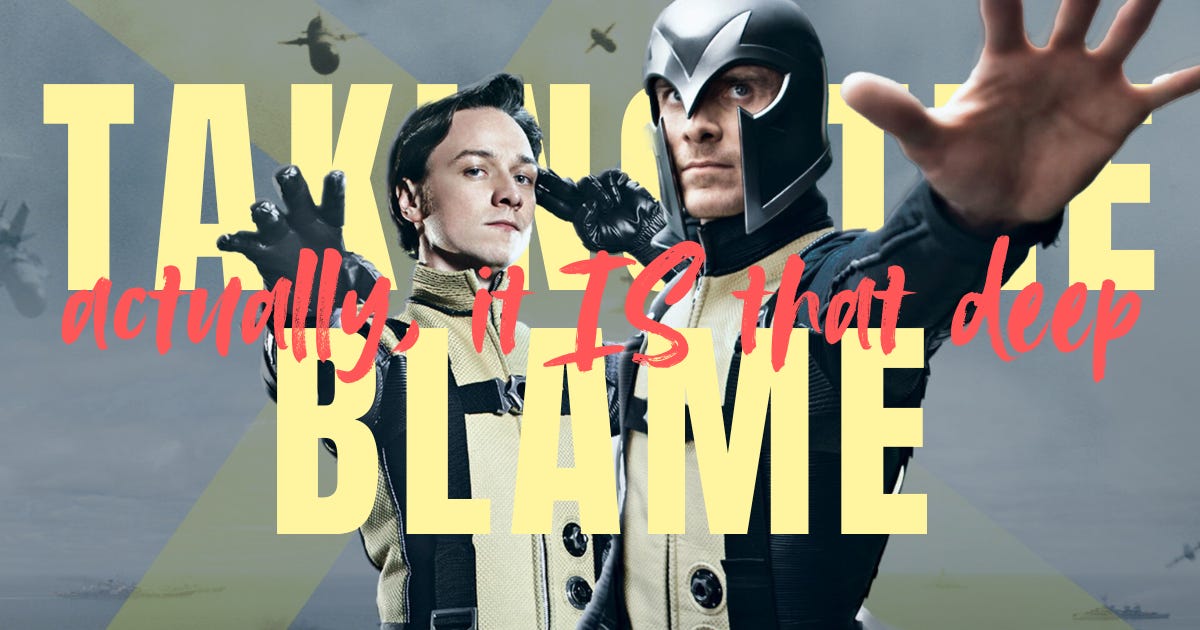
...among many, many others, including the central premise of X-Men: First Class, where Sebastian Shaw engineers the Cuban Missile Crisis. What fascinates me is not that these stories are historically inaccurate. Of course they are. They are superhero films. What fascinates me is how they choose to be inaccurate.
Notice that Marvel rarely changes the outcome of history. JFK still dies. Hiroshima still happens. The Vietnam War still devastates millions of lives. The Cuban Missile Crisis still brings the world to the brink of nuclear annihilation. The facts remain recognisable. What changes is responsibility.
French historian Pierre Nora argued that societies do not simply remember the past; they construct it through lieux de mémoire or ”sites of memory” that give history symbolic meaning as part of a “Collective Memory”. Popular culture has become one of the most influential of these sites. For millions of people, historical understanding is formed as much by cinema, television and video games as it is by school or the archive. I remember walking through the streets of Rome some years ago and getting a history lesson from a friend, who, despite not having sat in a history class in some time, knew copious amounts of detail about how and why each building was formed from their time playing Assassin’s Creed (much to my dismay as a then architecture student).
Marvel, in this case, is not simply borrowing history as a backdrop. It is participating in the production of historical memory. Yet what fascinates me is the way it chooses to remember. Again and again, historical agency is relocated away from institutions and toward fictional individuals or secret organisations.
This matters because historians have spent decades pushing against what is often called the “Great Man” theory of history. Thomas Carlyle famously argued that history is “the biography of great men,” shaped by extraordinary individuals whose decisions altered the course of civilisation. Modern historiography has largely rejected this. Social historians, Marxist historians and the Annales School instead emphasised structures: institutions, economics, geography, bureaucracy, ideology and everyday life.
Marvel appears to reverse that shift. Its version of history is populated not by impersonal systems but by hidden actors. If a war begins, someone engineered it. If an assassination occurs, someone secretly ordered it. If political instability emerges, a conspiracy lies beneath it. This is, perhaps, inevitable. Superhero stories require villains. Bureaucracy rarely makes for compelling cinema.
The political theorist Hannah Arendt offered a very different understanding of evil. Writing about Adolf Eichmann, she argued that the greatest atrocities of the twentieth century were often committed not by theatrical monsters but by ordinary people embedded within bureaucratic systems. Evil, she suggested, was frequently banal.
Marvel’s villains are anything but banal. Hydra is visually spectacular. Sebastian Shaw literally feeds on nuclear energy. The Red Skull seeks cosmic artefacts. By concentrating historical responsibility into comic-book antagonists, history becomes emotionally legible. Evil acquires a face. Yet in doing so, something is inevitably lost.
The structural conditions that make violence possible begin to fade into the background.
Which brings us back to X-Men: First Class.
On one level, the film is simply doing what superhero stories have always done: inserting extraordinary people into extraordinary moments. But read through the lenses of Nora, Carlyle and Arendt, something more interesting emerges.
Pierre Nora reminds us that popular culture is not merely entertainment; it is one of the places through which societies construct collective memory. Millions of people will never read diplomatic histories of the Cold War, but many will watch X-Men: First Class. The film, therefore, becomes part of the cultural memory of the Cuban Missile Crisis, regardless of whether audiences consciously distinguish fact from fiction.
Thomas Carlyle would have recognised Marvel’s approach immediately. History once again becomes the story of extraordinary individuals. Except Marvel goes one step further. Rather than placing “great men” into history, it invents hidden ones. Structural explanations become personal ones. Imperialism becomes Hydra. Cold War brinkmanship becomes Sebastian Shaw. Political assassination becomes the Winter Soldier. History is rewritten not by changing what happened, but by changing who is responsible.
Arendt, however, offers the most uncomfortable challenge to this way of remembering. In Eichmann in Jerusalem, she argued that the greatest atrocities of the twentieth century were rarely the work of theatrical monsters. Evil emerged through ordinary institutions, bureaucracies and individuals carrying out ordinary jobs. The true horror was not that evil was extraordinary, but that it was banal.
Marvel’s villains are anything but banal.
Hydra, the Council of Nine and Sebastian Shaw provide identifiable antagonists with clear motives and satisfying defeats. They transform structural violence into personal conflict. In doing so, they make history dramatically coherent, but perhaps also politically more comfortable. If the Cuban Missile Crisis happened because of Shaw, if the Vietnam War was manipulated by Hydra, or if political assassinations were the work of one brainwashed super soldier, then responsibility becomes concentrated in fictional villains rather than dispersed across governments, institutions and societies.
That is not to say Marvel has remained static. In many ways, the franchise has matured alongside American political culture. Earlier entries often externalised responsibility through secret conspiracies and hidden architects, making historical violence easier to personalise. More recent stories, such as The Falcon and the Winter Soldier, have become increasingly willing to acknowledge that injustice can emerge from institutions themselves, from racism, colonialism and systems of power rather than from a single mastermind. The evolution says as much about changing American political culture as it does about superheroes.
But the question remains.
What happens when our stories teach us to look for Red Skull instead of bureaucracy? Hydra instead of ideology? Sebastian Shaw, instead of the political decisions that brought the world to the brink of nuclear war?
The danger is not that audiences leave believing a mutant engineered the Cuban Missile Crisis. The danger is subtler. If we forget what Arendt called the banality of evil, if we come to imagine that history is always driven by hidden masterminds and spectacular villains, we risk overlooking the far more ordinary ways that evil enters the world. There is no secret battle between Shaw and Magneto taking place behind every historical catastrophe. More often than not, atrocities emerge from institutions, ordinary people, incremental decisions and systems that appear entirely unremarkable until it is too late.
Perhaps that is the greatest irony of X-Men: First Class. The film reminds us that one person can change history. Arendt reminds us that history is far more often changed by countless people who believe they are simply doing their jobs.
If we only learn to recognise evil when it wears a red skull or a mutant's helmet, we may fail to recognise it when it arrives in a suit, behind a desk, or wrapped in the language of bureaucracy.
This is Essay #5 of 102.
Between now and the release of Avengers: Doomsday, I’ll be working through every corner of the Marvel multiverse, using each story as a starting point to explore a bigger question about politics, philosophy and what it means to be human.
If that sounds like your kind of thing, I’d love for you to join me.
Subscribe below to follow the countdown, receive every new essay in your inbox, and let me know your own thoughts in the comments. Whether you agree, disagree, or have a theory of your own, I’d love to hear it.
If you want to learn more about the theories mentioned here, why not check them out? They should be available at your local library or through second-hand book sellers. They are both great reads that say far more than I can fit in this quick 600-word reflection.
Arendt, H. (1963). Eichmann in Jerusalem: A Report on the Banality of Evil.
Carlyle, T. (1841). On Heroes, Hero-Worship, and the Heroic in History.
Nora, P. (1989). Between Memory and History: Les Lieux de Mémoire. Representations, 26, 7–24.